
For writing you want to keep, use a good permanent black ink and archival paper, and store the result somewhere cool and dry. For fountain pens, the two lasting families are pigment and iron gall. Ordinary dye ink is lovely to use, but it can run if the page gets wet.
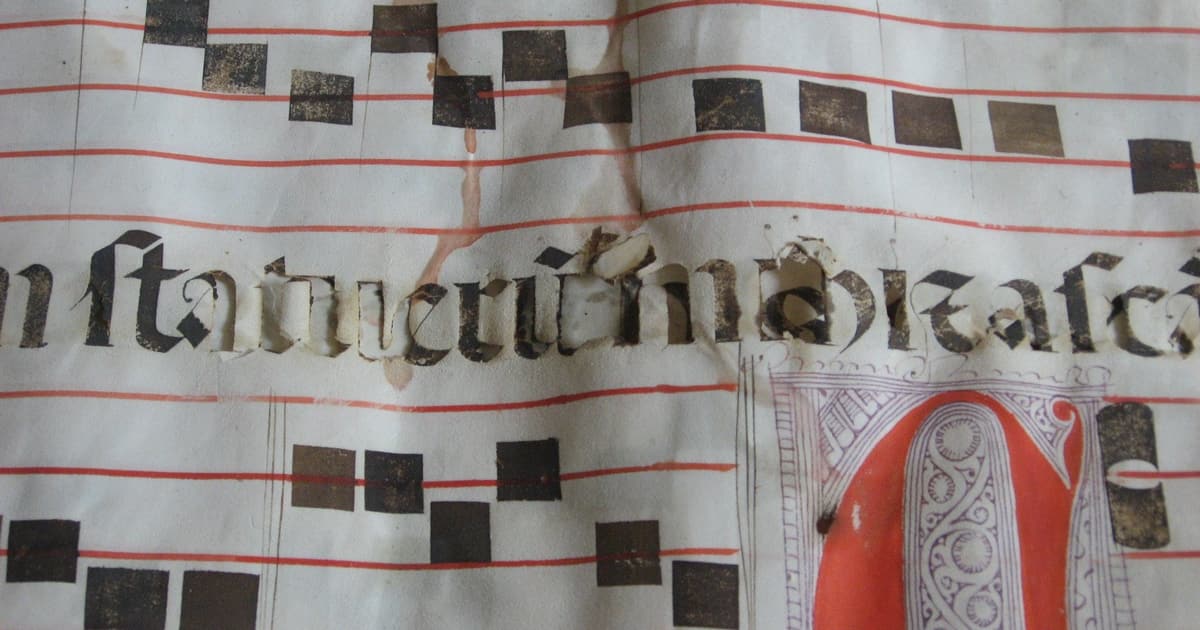
The photograph above shows why "permanent" is not the same as "harmless". That is iron gall ink which has done exactly what it was meant to do, and then kept going.
Three families, three behaviours
Dye
The ordinary fountain pen ink. Almost all of it is dye-based because dissolved colour flows freely through a capillary feed. Platinum’s FAQ puts the drawback briefly: dyes can generally be washed off with water or oil. Any given bottle may be better or worse than that, so read the label. Waterproof claims vary, and a maker's own wording is the thing to check.
Pigment
Solid grains suspended in liquid. Those grains are too large to dissolve, and that is why pigment ink resists water and oil. It is also why a pen needs more care with it, since the grains can settle and block fine channels. Inks made for fountain pens are very finely ground for that reason. Never use drawing or India ink as a substitute, because its gum binder can clog a pen fast. There is more on upkeep in how to clean a pen.
Iron gall
The historic writing ink of European records. Surrey History Centre describes it as oak galls steeped in water, added to wine or vinegar along with ferrous sulphate. It needs no adhesive, as it bonds to the page through a chemical action, and in time it oxidises and "burns in". The page says it was in use before the 7th century, and that traditional iron gall inks were officially replaced by dye-based inks in 1945.
The same chemistry creates the risk. Surrey's conservators explain that sulphuric acid forms as a by-product, eats into the paper, and can migrate to neighbouring sheets. A conservator at Hagley Museum and Library describes the resulting holes as lacing, made worse by humidity and handling.
Modern iron gall in a modern pen
Iron gall inks are still sold, sometimes under the name "registrar's ink". Wikipedia’s summary notes that modern versions are less corrosive than the old formulas, and that corrosion of metal parts is the type's known drawback. Expect to clean the pen regularly if you use one, and do not leave it sitting for months.
Do not assume the name guarantees waterproof black. One reviewer of a registrar's ink found it turned dark grey on paper, not black, and still bled a little under water after five minutes. A commenter there adds that the bond strengthens over the first 24 hours. That is one person's test on one bottle, but it is a useful warning to try an ink yourself before you rely on it.
We looked for a current official rule requiring a particular ink in UK birth, death and marriage registers, and did not find one we could confirm. So we treat the name as tradition, not as evidence of a standard.
Signing a will or legal document
The law is less fussy about pens than people expect. Section 9 of the Wills Act 1837, which applies in England and Wales, requires that a will is in writing and signed, with the signature made or acknowledged before two or more witnesses present at the same time. It says nothing about ink. GOV.UK’s guidance adds that you must sign in the presence of two witnesses over 18, that each must then sign in your presence, and that any changes need the same process. It notes that Scotland and Northern Ireland have different rules.
Practical advice does favour ink. The Gazette says it is advisable to use ink if a will is handwritten, and warns against mixing ink and pencil, because that may suggest parts were not final. A well-behaved permanent black ink in a pen that writes reliably is a reasonable choice for a signature. Let it dry fully before anyone turns the page or folds the sheet. The witnessing rules are what make the will valid, and those are the part to get right. If your circumstances are at all complicated, speak to a solicitor before you sign.
The records guide published by Quakers in Britain is a good plain example. For manuscript minutes and permanent records it says it is best to use a fountain pen with a good permanent black ink, or archival pens, on archival quality paper. It says felt-tip, roller-ball, ball point and gel pens are not suitable for archives, because they start to fade and most are not waterproof. For page numbers and labels it suggests a 2B pencil.
How to store what you write
Permanence is partly a matter of where the page lives. Surrey's advice for iron gall originals is relative humidity under 60%, somewhere cool, dark and dry but not too dry, with gentle handling. That suits family papers in general. A wooden box in a spare room is kinder than a damp garage or a sunny shelf, and an attic that swings between hot and cold is not ideal either.
For anything inked in a historic style, keep interleaving in mind. Since acid can migrate between sheets, a layer of acid-free paper between old documents is sensible, and a conservator can advise on anything of value. Please do not attempt washing or chemical treatment at home. Surrey History Centre says that there is still no definitive solution, even for professionals.
A simple way to choose
Ask what could actually happen to the page:
- A letter or a journal you will read again. Ordinary dye ink, kept out of the light in a closed book, is what most people use. See how to start a journal.
- Something that might get wet, such as an envelope or a recipe book. A pigment ink makes sense, with a little extra care for the pen.
- A record meant to last for generations. Permanent black ink, archival paper, and test it first on the paper you plan to use.
Pages we read for this entry
- Surrey History Centre: the development of iron gall ink
- Platinum Pen: frequently asked questions
- Wikipedia: fountain pen ink
- Quakers in Britain: creation of records (PDF guide)
- Wills Act 1837, section 9
- GOV.UK: make sure your will is legal
- The Gazette: signing your will correctly
- Hagley Museum and Library: what is the value of a piece of paper?
- Parka Blogs: a review of one registrar’s ink