
Choose a fine or medium steel nib on a pen that takes both cartridges and a converter. Those two choices decide how the pen behaves every day. Barrel colour, weight and a gold nib can wait until you know how you like to write.
We do not test or rate pens at Magpie Ink, so there is no list of models here. What follows is how to judge any pen on a shop counter or a product page, and what the words on the box mean.
Why it feels unlike a ballpoint
A fountain pen does not rely on you pressing ink out of it. Ink moves from a reservoir through a ridged feed to the slit in the nib, and capillary action does the carrying. The Science Museum Group credits Lewis Edson Waterman as the inventor of the capillary feed fountain pen in 1883, and the principle has stayed recognisable since.
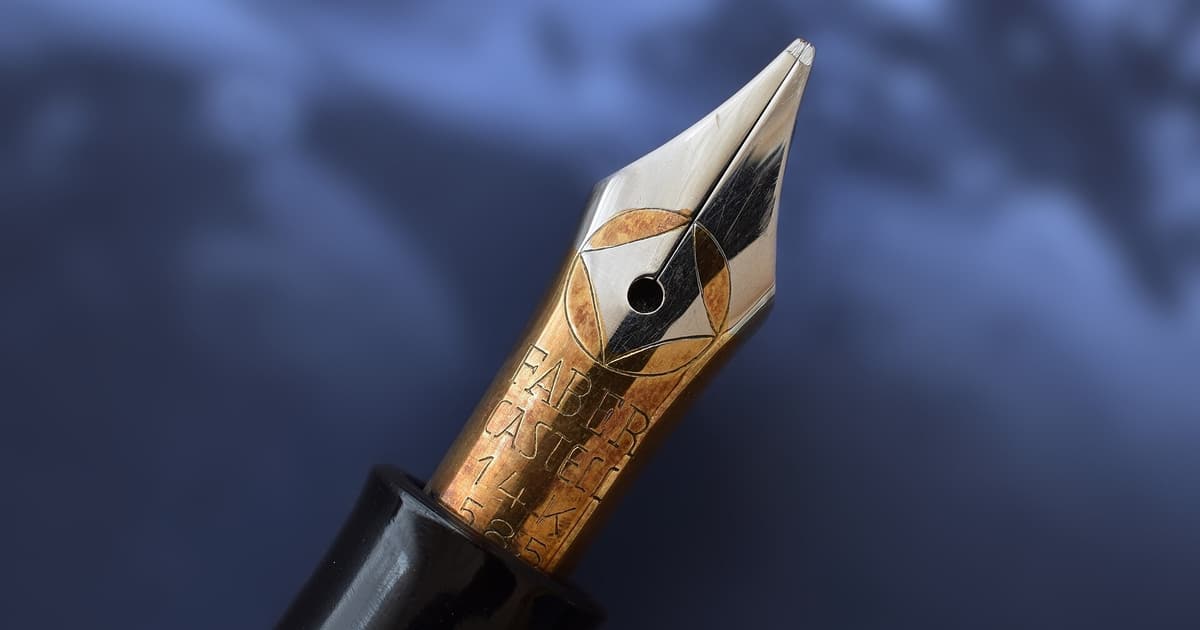
The practical result is that you can stop pressing. New owners often bear down out of ballpoint habit, which spreads the tines and can spoil a nib. Let the weight of the pen do the work and hold it at a comfortable slope, with the printed side of the nib facing up.
Nib width comes first
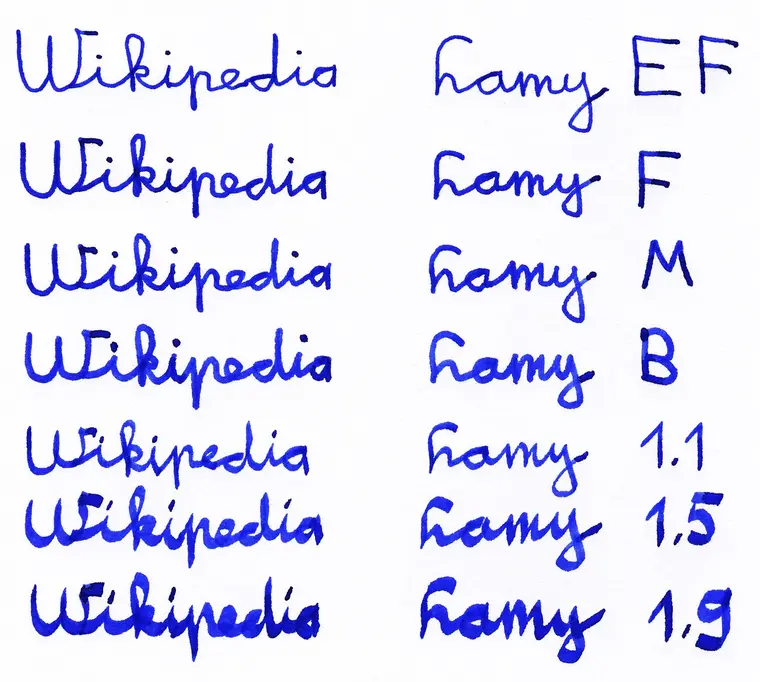
The letters stamped on a nib describe the width of the line. They are a rough guide and not a standard, but they tell you most of what you need. The figures below come from a UK stationer’s guide, and they are approximate.
Match the width to the size of your handwriting and the paper you use most. Small, tight writing closes up under a broad nib, and letters like e and a fill in. Fine and extra fine dry faster and cope better with ordinary paper because they put down less ink. The same stationer calls fine the size it most often suggests to newcomers. Medium writes wetter and shows more of an ink's shading, which is lovely on good paper and less so on an office pad. Our guide to paper explains why.
Where a pen was made changes the meaning of the letters. Japanese nibs run about one size narrower than European ones with the same label, a point made by both The Journal Shop and this guide from a Japanese cultural centre. A Japanese fine is close to a European extra fine, so if you like a European fine you may want a Japanese medium.

Steel is not the beginner's compromise
Most pens at everyday prices have steel nibs, and that is no hardship. The Journal Shop says plainly that steel should not be treated as an inferior material, and that gold does not make a nib smoother. Gold is softer and has more give, so it can feel cushioned. Smoothness depends on how the tip was shaped and finished. If a steel nib scratches, it is a badly set nib and not a sign that you need gold.
How it takes on ink
There are three common arrangements. Most first pens use the first two, and one guide describes cartridge and converter as the filling system you will see most often.
A pen that takes both is the flexible choice. Cartridges are tidy when you are out, and a converter opens up bottled ink when you want more colours. Check what the pen accepts before you buy, because not every cartridge fits every pen. Some makers use their own shape, while others take the "international" type.
A built-in piston holds more, since the whole barrel becomes the reservoir, but the same guide warns that taking one fully apart may need a special wrench. That matters little if you are happy to flush it with water and leave the mechanism alone.
If you write with your left hand
Left-handers can use ordinary fountain pens, and smudging is the main thing to manage. The stationer’s guide suggests finer nibs and faster-drying inks, and notes that most left-handed writers get on well with a standard round-tipped nib in fine or extra fine. Pens sold specifically as left-handed usually have an oblique nib, which suits some writers and not others, so try one first if you can.
Paper angle helps as much as the pen. Teach Handwriting, writing about children, suggests angling the page between 30 and 45 degrees clockwise for left-handers, and says that specialists differ a little, so comfort should settle it. Adults can use the same range as a starting point.
What to try before you pay
If you can get to a shop that lets you write with the pen, a couple of minutes tells you plenty. Write a line of your own handwriting at your normal size, without pressing. Then check these:
- Does the line start straight away, and does it stay even when you write quickly?
- Does the grip section sit where your fingers want to go? Steps and threads near the nib can bother some people.
- Is the balance better with the cap on the end of the barrel or off? Try both.
- Can you read your small letters, or do they close up?
Buying online, read the returns policy and look for writing samples in the width you want. A photographed line on a known paper is more useful than an adjective.
Your first week
Start with an ordinary bottled or cartridge fountain pen ink. Fountain pen ink is almost always dye-based, and it is the easy type to live with. Drawing ink is another matter: India ink carries a gum binder that can quickly clog a pen, so keep it out. Specialist permanent inks are worth learning about, but they ask more of you, as our entry on inks that last explains.
Write a little every day if you can, because ink left to sit can dry in the feed. When you do take a pen on your travels, a few small habits prevent most trouble, and they are set out in flying with a fountain pen.